



Breaking
Senator Mitch McConnell has broken his silence about the health emergency that led to his hospitalization, revealing that he fell and was briefly unconscious around the time he was taken for medical care. The 84-year-old Kentucky Republican said doctors conducted extensive testing to determine what caused the episode. According to McConnell, the evaluations found no broken bones, concussion, heart attack, stroke, tumors, or internal bleeding.
McConnell also disclosed that he was treated for mild pneumonia and has since been transferred to a rehabilitation facility. Although he said he is “regaining my strength,” he acknowledged that he is not yet able to return to the Senate. The statement provided the most detailed public account of his condition since his hospitalization and answered some of the most serious questions surrounding his prolonged absence.
Details & Background
McConnell said his fall is connected to physical challenges associated with the polio he experienced during early childhood. The congressional physician’s office said the senator has suffered several falls because of his post-polio condition and is receiving physical therapy intended to reduce the risk of future incidents. A multidisciplinary medical team reported finding no fractures, cardiac abnormalities, stroke, tumor, or hemorrhage.
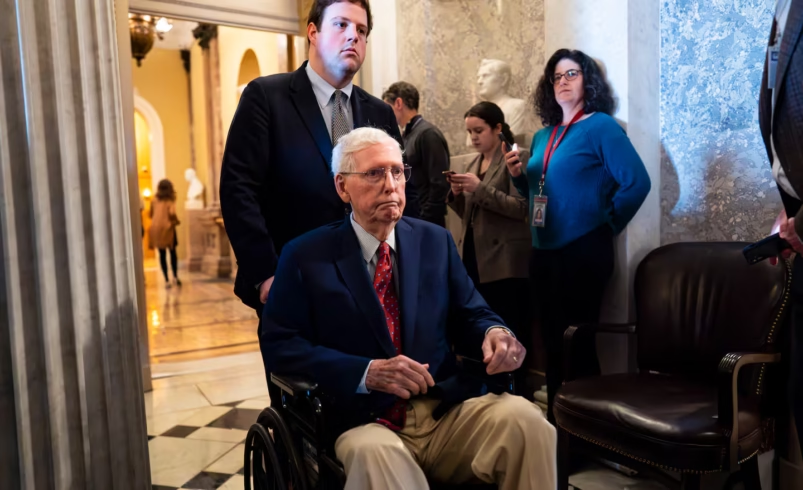
The senator has faced several visible health problems in recent years. He previously suffered a concussion after falling at a Washington hotel and was away from the Capitol for several weeks. He later experienced two highly publicized episodes in which he appeared to freeze while speaking to reporters. During another incident, he fell while leaving a Republican luncheon and sprained his wrist. McConnell has continued attending Senate sessions, frequently using a wheelchair to move through the Capitol.
McConnell’s office initially released little information beyond saying that he was receiving excellent care and recovering. As the silence continued, speculation spread online about whether he was incapacitated or had died. Kentucky Governor Andy Beshear, a Democrat, publicly requested a transparent update on the senator’s health. McConnell responded by releasing a photograph of himself smiling beside his wife, former Transportation Secretary Elaine Chao, while confirming that he was continuing to communicate with his staff.
The hospitalization comes during the closing months of McConnell’s historic Senate career. First elected in 1984, he served as the chamber’s Republican leader for nearly two decades, holding power as both majority leader and minority leader. He is scheduled to retire when his current term ends, but he emphasized that his medical setback has not changed his intention to complete the work Kentuckians elected him to perform.
Reactions
McConnell directly addressed the length of time it took him to speak publicly, explaining that members of his generation often hesitate to discuss the vulnerability associated with aging. “Even in the public eye, I feel that same instinct — I can’t help it,” he said. His comments offered a personal explanation for the limited information released while pressure for a fuller account was growing.
He also sought to assure Kentucky residents that he remains engaged in public business. “I still have unfinished business to complete on your behalf,” McConnell wrote, adding that he has “every intention of finishing the job” voters elected him to do. McConnell said he would continue working with his Senate staff from rehabilitation while doctors and therapists oversee his recovery.
The health update carries immediate political consequences. With McConnell temporarily unable to vote, Republicans have one fewer senator available as they work to confirm President Trump’s nominees, strengthen military funding, and advance the administration’s legislative priorities. In a closely divided chamber, even a short-term absence can complicate scheduling and force leadership to delay votes when attendance is uncertain.
McConnell’s statement may reduce the most alarming speculation, but it does not establish a timetable for his return. His acknowledgment that he cannot come back “quite yet” leaves Senate leaders managing an unpredictable situation while balancing the senator’s recovery against the chamber’s obligations.
Why This Matters to You
A senator’s health is a private matter, but it becomes a public concern when an extended absence affects representation and the operation of Congress. Kentucky residents are entitled to know whether their elected senator is capable of carrying out his responsibilities, particularly during consequential votes involving national security, judicial nominations, federal spending, and President Trump’s agenda.
The government must respect McConnell’s medical privacy while providing enough reliable information to prevent rumors from filling the void. Senate officials should also maintain clear procedures for informing the public when a lawmaker’s condition creates an extended inability to vote or participate. Transparency does not require releasing every medical detail, but citizens deserve an accurate understanding of who is actively representing them.
McConnell’s recovery also underscores the physical demands placed on aging public officials. His long history with polio and his recent falls demonstrate that mobility challenges can become more serious with age, even for individuals determined to continue serving. The immediate priority is ensuring that he receives appropriate rehabilitation and does not return before his doctors believe it is safe.
For Republicans, the political stakes remain significant. Every available vote can determine whether a nominee advances or a major bill reaches President Trump’s desk. McConnell has made clear that he considers his work unfinished. Until he is medically cleared to return, his condition will remain both a personal struggle and an important factor in the Senate’s ability to conduct the nation’s business.