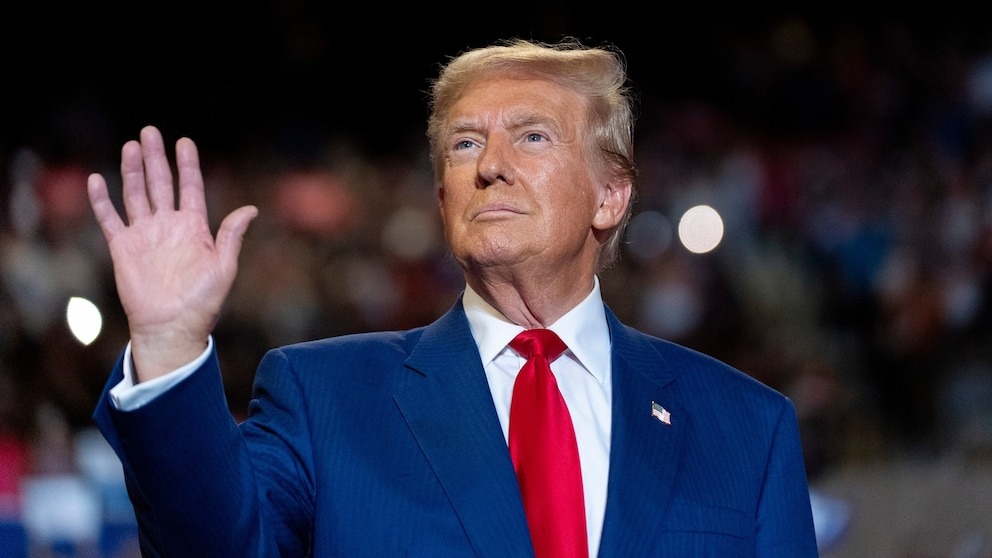
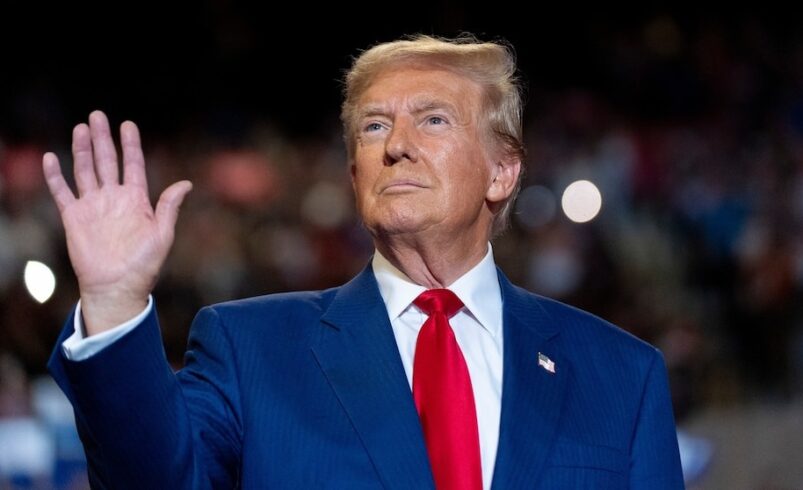

President Donald Trump took the Iran war to a campaign stage on Friday night, telling a midterm rally in Mobile, Alabama that the conflict will end “very soon” — probably right after the midterms — and promising oil prices will “come tumbling down” the moment it does. It was the most specific version yet of a prediction he has been making for weeks: the Iran war ends after the midterms, “one way or another.”
It is also a promise that cannot be tested before Election Day. Voters are being asked to take it on faith — and to believe that relief at the gas pump is coming just after the ballots are counted.
What Trump Actually Said in Mobile
Speaking to a packed arena on October 2, Trump painted a picture of a Tehran on the ropes. “Their economy is down the tubes,” he said, claiming Iran is suffering roughly 310 percent inflation, with no money, no currency, and a military that has been shattered.
“Iran will very soon be ending one way or the other,” Trump told the crowd. “It’ll either just say, look, they have 301 percent inflation… Their military has been defeated, their navy is gone, their air force is gone, everything’s gone.”
He also clarified the objective of Operation Epic Fury, the U.S.-Israel campaign that opened with B-2 strikes in late February. The mission was never occupation, he said — it was making sure Iran never gets a nuclear weapon. “They won’t have nuclear. And I did that in one night. The B-2 bombers took them out,” he said.
Trump acknowledged the cost Americans have paid. He said 18 U.S. service members have been killed in the more than six months of fighting — a figure Fox News reported matches the Pentagon’s casualty accounting. And he argued the pain at the pump was “a small price to pay” compared with the alternative of a nuclear-armed Iran.
The Oil Price Promise — And What It Would Take
The economic pitch was the headline of the night: end the war, and energy prices fall fast. “The moment the war ends, oil prices will come down sharply,” Trump said — eventually, he added, they could drop below where they were in his first term.
The stakes are real. The Strait of Hormuz, which carried roughly 20 percent of the world’s petroleum before the fighting began in February, remains severely disrupted. Benchmark crude has topped $100 a barrel. The national average for regular gasoline has climbed past $4.22 a gallon — more than a dollar higher than a year ago, according to AAA. In Alabama, regular gas was $4.01 and diesel $6.02 the day of the rally, against $2.79 and $3.45 a year earlier.
Trump used the rally to announce immediate relief of a different kind: an agreement with G7 nations to release “massive amounts” of diesel from European reserves, starting right away. “The price of diesel is already coming down,” he claimed.
“One Way or Another”: The Bombing Option
The phrase “one way or another” deserves attention, because the week’s reporting suggests both readings are on the table. On September 25, The Wall Street Journal reported that Trump has privately told aides a resumption of the bombing campaign after the midterms is likely. The next day, he rejected Iran’s proposal for a seven-day plan to reopen the Strait of Hormuz as “not acceptable.” Then he told Axios he expects more talks this week and is “always thinking” about resuming strikes.
“We could leave tomorrow, and it would take them years to rebuild from what we did to them because they just wouldn’t negotiate,” Trump said in Mobile. “They played their cards. They played their cards too tough.”
Read together, the two paths point to the same calendar: a negotiated end, or a decisive escalation — both timed for after November 3.
What It Means for the Midterms
This is not a new prediction. Trump first floated the post-midterms timeline in September, telling reporters in Dallas that he expected the war to end “immediately after the election” because Tehran “can’t hold out any longer.” He repeated it during a September trip to Ireland: “right after the midterms, actually.” The Mobile rally simply turned it into a campaign promise.
The politics are straightforward. Republicans are defending narrow House and Senate majorities in an election where gas prices and inflation are the top pain points — the very races that will decide control of Congress. Trump’s pitch to voters: give Republicans the House and Senate, and the war ends, oil falls, and every adult gets a $5,000 “Trump dividend” to spend in America.
But not everyone in the administration is on the same calendar. Vice President JD Vance pointedly refused to predict the war would end by the midterms, saying he didn’t want to set “artificial timelines.” And the promise carries an obvious catch: a war that “ends” with a renewed bombing campaign would not lower oil prices on day one — it would likely raise them until the strait actually reopens.
For now, the only part of the Mobile promise that pays out before Election Day is the expectation itself.